


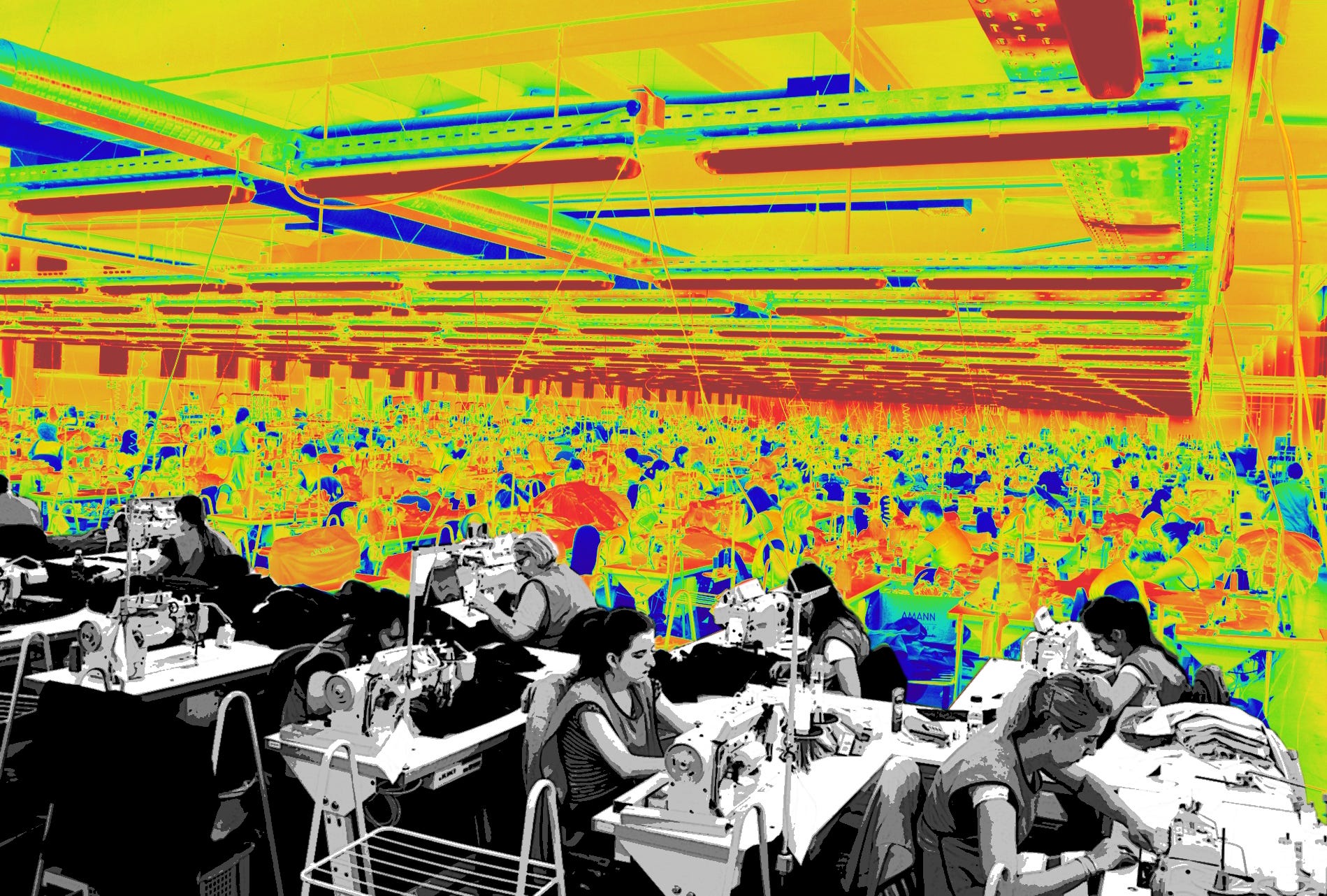
A new industry toolkit for managing heat stress is now live.
Last week, the American Apparel & Footwear Association (AAFA) launched the AAFA Heat Stress Toolkit at Cascale’s Annual Meeting 2026 in Athens. For FPC, though, the more interesting part of this story is how it was made: what changes when manufacturers help design the tools they are expected to use, and what questions emerge when you try to make heat stress guidance work in the real world.
Commissioned by AAFA, this toolkit was designed through a collaborative process. The AAFA Heat Guidance Working Group, consisting of brands, manufacturers, and worker-advocacy groups, developed the Brand Implementation Guidelines and Supplier Survey. Meanwhile, the FPC developed the manufacturer-specific guidelines and workbook, with support from the Heat Guidance Working Group.
The process also led to a closed-door heat stress workshop prior to Cascale’s Annual Meeting, bringing manufacturers, brands, industry organizations, worker-focused organizations and other stakeholders into the same room to explore some of the gaps and challenges identified while creating this guidance.
The toolkit is one outcome of that process. The workshop was another.
Why Now?
Heat stress is no longer a future scenario for factories to prepare for. It is already affecting production regions around the world, putting pressure on workers, facilities and the systems designed to protect them. 2026–2027 El Niño conditions could rank among the most extreme on record.1 Extreme heat is becoming a recurring operating condition for factories rather than an exception.
Heat is simultaneously a human-rights and worker well-being issue, an operational issue and a supply-chain resilience issue: the International Labor Organization (ILO) links excessive workplace heat to 18,970 deaths and 22.87 million injuries a year2, while recent research from New York University (NYU) Stern links higher heat and humidity to absenteeism, lower productivity, higher defect and reprocessing rates, and production and delivery disruption.3
That makes the question increasingly practical: what can factories actually do about it, and how can brands support that work without creating another layer of audits, data requests or unfunded expectations?
What is the toolkit?
The five-part toolkit builds on AAFA’s Guide to Protecting Workers from Heat Stress, published in April 2026.
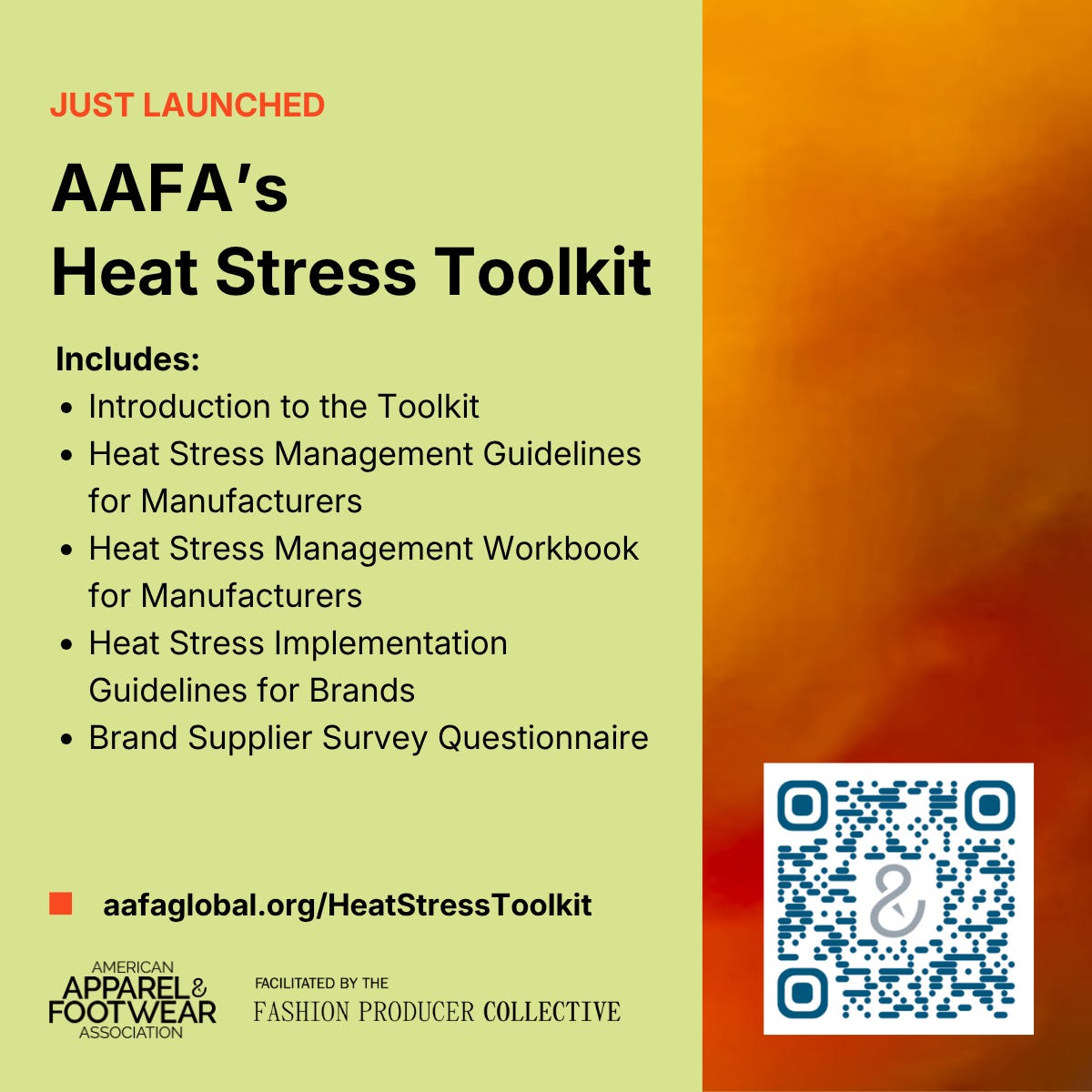
It translates the guidance into practical tools for two sides of the supply chain:
For manufacturers: a Heat Stress Mitigation and Adaptation Plan, manufacturer guidance and a companion workbook to help facilities understand their heat stress profile, identify hotspots and trigger levels, and develop action plans.
For brands: implementation guidelines and a standard supplier survey questionnaire designed to make expectations clearer, reduce duplication and support a more consistent approach across suppliers.
Importantly, this is not an audit protocol or another compliance standard.
It is a framework for facility-level self-management, designed to help manufacturers build heat stress plans that reflect their operational, technical, financial and local realities. For brands, it provides a common starting point for their own processes, without asking every supplier to respond to a different version of the same question.
That distinction matters.
The Five Principles Behind This Toolkit
Heat stress sits at the intersection of worker well-being, climate adaptation and operational resilience.
Factories are already dealing with rising temperatures, increasingly severe heat events and infrastructure that was often designed around a very different climate. At the same time, manufacturers are being asked to collect more data, meet more requirements and make more investments, often without the commercial conditions needed to do so.
A useful heat stress response therefore cannot be about adding another checklist to the supply chain.
It has to be about protecting workers, using information to trigger action, understanding local context and sharing the risk and cost of adaptation.
Those ideas became the five principles at the center of the toolkit:
Protecting workers. The goal is to identify and address heat stress early, with facilities retaining the flexibility to choose controls that fit their context rather than using the toolkit as an audit or verification protocol.
Measuring to act. Data should be used to trigger protection and target investment, while remaining with the facility and avoiding unnecessary or duplicative reporting requests.
Sharing risk and financial responsibility. Brands and manufacturers should share responsibility for the investments and potential disruption involved in building resilience, creating the commercial conditions needed to protect workers.
Prioritizing context over prescription. Heat stress management needs to reflect the operational, financial, technical and local realities of each facility; there is no one-size-fits-all solution.
Making communication two-way. Brands and manufacturers should work together to plan for heat stress, communicate expectations and investment needs early, and address potential impacts on production before they become crises.
Who is it for?
The toolkit is designed for the people responsible for putting heat stress management into practice.
Factory and group-level management can use the five steps to shape an overall heat stress strategy, bring the right departments together and involve workers early in designing mitigation and adaptation measures.
On-site EHS teams can use the guidance and workbook to build a facility heat stress profile, identify hotspots and trigger levels, and develop practical action plans.
Brand sourcing and compliance teams can use the brand guidelines and shared supplier survey to create more consistent expectations, avoid duplicate requests and build shared responsibility for the costs and risks of adaptation.
The process mattered as much as the output
One of the most important parts of this project was the way the toolkit was created.
The manufacturer guidance and workbook were written by the people who actually manage factories and heat stress on the shop floor. Key contributing authors included Elevate Textiles, Inc., Epic Group, Shahi Exports and YKK Corporation, with additional review support from Crescent Bahuman Ltd., MAS Capital (Private) Limited, TAL Apparel, Yee Chain International and the Vaada Hope Foundation.
A broader group then reviewed the work, including a medical doctor, brands and worker-focused civil society organizations.
The brand guidelines and supplier survey went through a similar process in reverse, with extensive input from manufacturers and civil society.
In other words, the people expected to use the guidelines were involved in designing them.
Others were there to challenge assumptions, test the logic and help identify blind spots.
“Co-creating these guidelines demonstrates the power of a manufacturer-led approach: those who manage heat stress on the shop floor designed the tools they will implement, with input from brands and others,” said the key contributing authors of the AAFA Heat Stress Toolkit. “We appreciate AAFA putting suppliers in the driver’s seat. Given the mounting climate urgency and rising global temperatures, this must be an inflection point for our industry. We call on brands, auditors, and MSIs to adopt these unified guidelines, and avoid fragmenting the supply chain with duplicative standards. To truly protect workers, we must share the risks — creating the enabling conditions for manufacturers to invest in long-term climate resilience.”
That process produced something else too: a clearer view of what is still unresolved.
The toolkit is a starting point, not a finish line
Writing the guidance surfaced questions that could not be fully answered within the project. Some were technical, some financial, and some concerned what an effective, worker-centered response to heat stress should look like in practice.
Four areas stood out.
1. How do you measure what is actually happening?
A factory floor can contain enormous thermal variation, particularly around processes such as ironing, pressing, washing, drying, fusing and laundry.
The challenge is finding measurement approaches that are accurate enough to drive action, but simple enough to use on a busy production floor. The toolkit uses the US OSHA standard as a practical reference point for now, while recognizing that more research is needed across different climates and production contexts.
2. Are our controls keeping up with the climate?
Cooling and ventilation systems are under increasing pressure as temperatures rise, while much industrial design still relies on historical climate data.
The toolkit brings together controls already being used by manufacturers, but more evidence is needed on what works, where, at what cost and for how long.
3. Where are the tools to support better decisions?
Manufacturers need more than a list of possible interventions. They need practical ways to weigh thermal comfort against capex, opex, return on investment and emissions, and determine which controls make sense for their facility.
4. Who pays for adaptation?
Heat adaptation can require significant upfront investment and, in some cases, increased operating costs without an obvious financial payback.
“Shared responsibility” has to become more concrete: how can brands, financiers, development finance institutions and philanthropy help create the conditions for manufacturers to invest in long-term resilience?
And there is another dimension that should not be lost. Heat stress does not stop at the factory gate. More work is needed on workers’ health, income, vulnerability and conditions at home and in transit, and on how workers themselves can shape heat stress management.
Taking the questions into the room
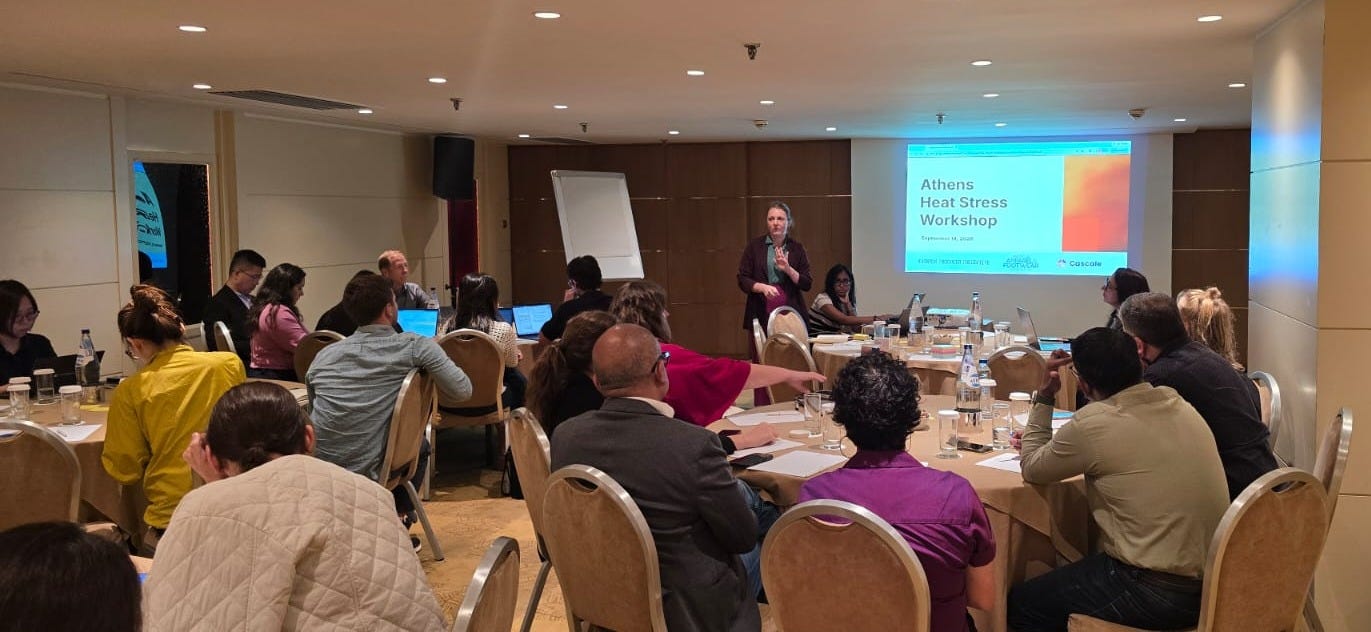
These questions helped shape a wider conversation for a closed-door heat stress workshop at Cascale’s Annual Meeting in Athens, bringing together manufacturers, brands, industry organizations, worker-focused organizations and other stakeholders.
The conversation moved beyond what facility-level guidance can address on its own: how to tackle infrastructure constraints, financing, commercial alignment and the fragmentation of existing approaches.
The aim was not to create another set of recommendations. It was to begin building a more joined-up view of what the industry needs next, and where different actors can contribute.
The toolkit gives the industry a common starting point. The workshop opened up the next set of questions.
The next step is to see what we learn from using the toolkit, where it works, where it falls short, and what needs to be built next.
FPC will keep bringing those questions to the forefront.
🌡️ The AAFA Heat Stress Toolkit is now available on the AAFA website. You can also visit fashionproducercollective.org to learn more. 🌡️
Would you like to be involved? This platform is for producers. Learn more about taking part in our manufacturer-led activities. Even if you’re not ready to be a member, you can still opt-in to our activities.
https://www.ilo.org/resource/news/climate-change-creates-%E2%80%98cocktail%E2%80%99-serious-health-hazards-70-cent-world%E2%80%99s
https://bhr.stern.nyu.edu/wp-content/uploads/2026/06/NYU-CBHR-Extreme-Heat-in-Garment-Suppy-Chains_FINAL-UPDATED-June-9.pdf