


Guest Contributor: Dr. Vidhura Ralapanawe, Epic Group
As the World Burns
Heat has engulfed most of Europe and North America, coming in wave after wave, pushing temperatures beyond the limits of human infrastructure. Forest fires and extreme temperatures have wreaked immeasurable damage on other species and ecosystems, our more-than-human world.
Torrential rains and heat waves are engulfing Japan, China, and South Korea. Global sea surface temperature, temperature in the tropics, and global surface temperature are all the highest on record, and the super El Niño is just starting. The next 12 months will record an all-time high—beating the records set in the 2023/24 El Niño cycle!
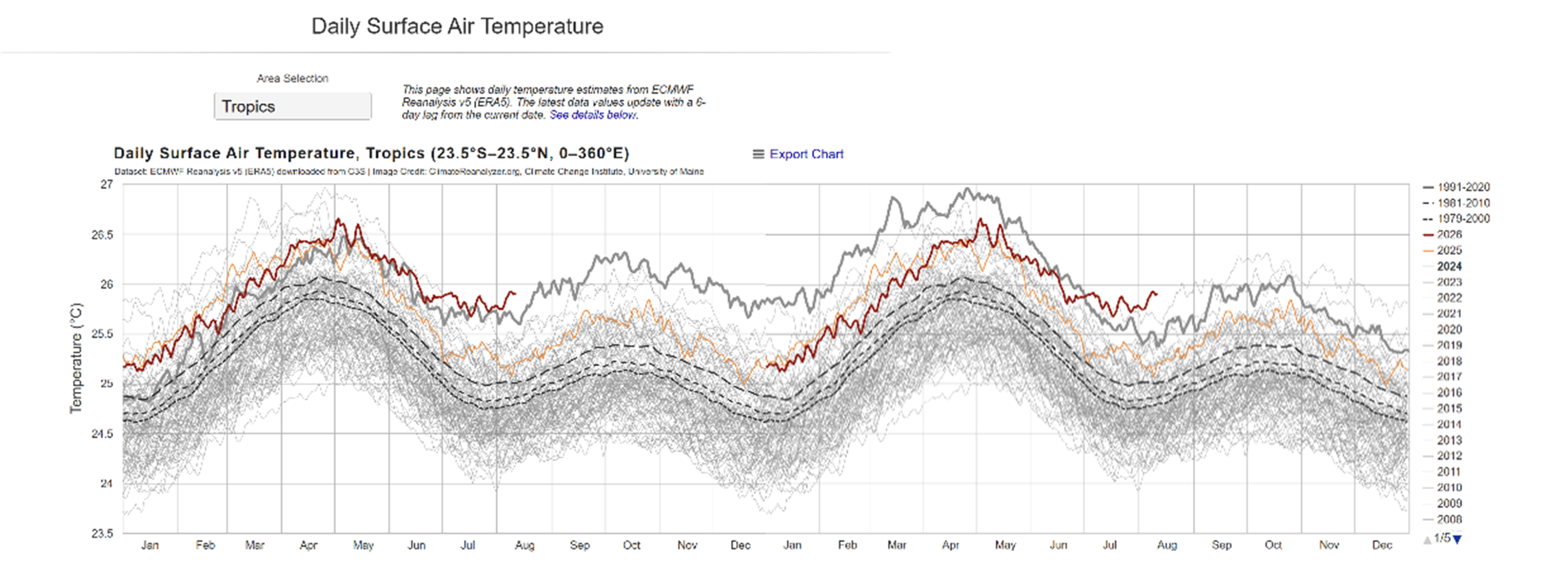
Yet the tropics and the Southern Hemisphere haven’t seen its full impact just yet. The tropical temperature peak will begin in February 2027 and stretch through July. Alongside it, the heat waves will emerge.
The tropics are where the bulk of our fashion manufacturing currently lies.
Fashion Manufacturing in Crisis
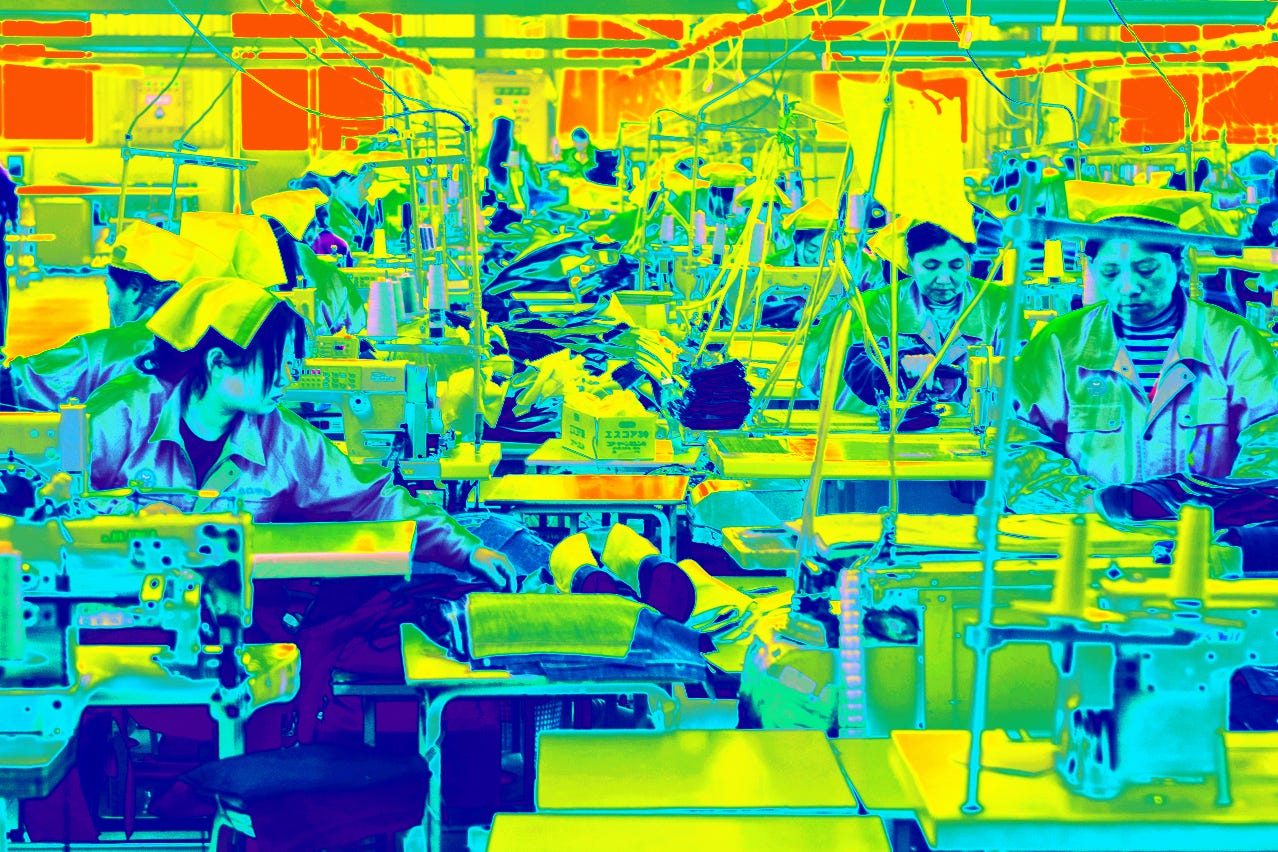
Global infrastructure was never designed for the current climate reality—be it heat waves, powerful cyclones/hurricanes/typhoons, or intense rainfall triggered by enhanced warming. Factories that make the garments we love are no different. They are ill-prepared to handle the current heat, which will inevitably compromise the well-being of workers.
Industry journals have been reporting on heat issues for a few years now.123456 I first spoke of managing heat stress on the factory floor, within the larger framing of climate adaptation going back to 2023 – yes, the year that warming ‘jumped’. A spate of reports in the last six months has shown the challenges and impacts of heat waves in factories in stark terms.7891011
Heat is not merely a factory floor issue. It impacts the families of our workers and their communities. Schools close due to their inability to keep children safe, but their homes aren’t well designed to withstand heat either. Our workers leave their elderly parents and children in poorly insulated and even more poorly ventilated homes, carrying their burdens in their heads and hearts. The evenings haven’t been kind either: by the time they turn up for work, they’re already under heat strain.
Heat is also a gendered issue, partly shaped by physiology and partly by women’s roles in the family. It’s physiological, social, and cultural. Women who are menstruating, pregnant, or breastfeeding have added vulnerabilities. There is an elevated risk of reproductive illnesses. Yes, there are plenty of reports, yet these aspects are hardly internalized and have not become part of the discourse.
Heat is also a moral, ethical, and increasingly human rights and legal issue. Those who contributed least to the climate crisis are asked to pay a steep price. Heat stress in factories will likely expose European brands to legal risk through CSDDD. It doesn’t shield non-EU organizations—we are likely to see lawsuits challenging both fashion brands and manufacturers if we do not promptly address the issue as an industry.
Lagging in Action
Fixing heat stress needs an unprecedented collective effort from the fashion industry, something we have never attempted in terms of scale and urgency. Our lack of collective action has resulted in our industry lagging in progress on decarbonization.
The American Apparel and Footwear Association (AAFA) got the ball rolling with the heat stress guidelines published earlier, and their implementation guidelines for brands and manufacturers will be launched mid-September at the Cascale Annual Member Meeting. (Disclosure: I am part of the heat stress working group of AAFA).
There are also multiple competing standards being developed by brands and other organizations, raising the specter of a proliferation of standards and a manufacturers’ next audit-and-data “hell-loop.” We are taking the same compliance path as always. But will it really solve the heat stress crisis in factories?
No.
That is because tools that focus on administrative actions, training, and management systems leave the biggest and messiest parts of the response ignored.
The hard truth is that hydration and fans will not go far in many regions, where comfort needs active cooling such as air conditioning. Places that are okay today will not be in 2030. We are dealing not with a linear problem, but a step-change problem. Yet air conditioning is the biggest elephant in the room. We are dancing around it, trying to avoid it as much as possible due to energy, carbon, and penalty concerns. But what about lives?
The current guidelines are not designed to solve all aspects of the problem. We do not harbour such illusions.
They don’t address the lack of knowledge and skill sets for engineering solutions—not just in factories, but also among cooling and ventilation systems specialists, because rapid warming in the last few years has left even standard-setting organizations underprepared. Some challenges are identified here.
They don’t address the lack of deep understanding regarding multiple intersecting standards (ASHRAE 55.1 vs. NIOSH/OSHA, for example). They don’t address how acclimatization to local conditions works.
They don’t address how to finance engineering solutions, which pose both capex and opex challenges at the same time (hint: it isn’t solvable with debt).
They don’t address how the commercial relationship between brands and manufacturers has to evolve to ensure that we safeguard our workers as a preemptive measure and not post-act (like Rana Plaza).
They don’t explore the commercial implications of guidelines. For example, a 50/10 work/rest cycle will reduce the daily output of a factory by 25% at minimum, steeply increasing the cost of production.
Of course, AAFA guidelines were never expected to do all of this. But if these critical needs are not addressed, the guidelines by themselves will never deliver the outcome we aspire to achieve. Guidelines are necessary—but not sufficient!

A Different Path
I would love us to begin with a holistic, ecosystem needs map that tells us what we know and what we don’t; what problems we can currently solve and what requires moving mountains; and what different stakeholders/groups are doing, alongside their overlaps and gaps.
Large-scale resource mobilization in funding, technical skill, and capacity is critical, and needed in haste. Without solutions outside the traditional debt paradigm, we will be at an impasse with workers paying the ultimate price. Passing the full financial risk and burden to manufacturers did not help us decarbonize, nor will it address heat stress. If we separate ourselves as brands (who direct) and manufacturers (who pay and act), we will fail. We can succeed as a collective, or fail as individual organizations. It is as stark as that.
The danger is imminent. European heat waves showed how near mortality is. It’s already present in cotton fields, and factory floors are not far behind. Moving an industry is a decadal task, the clock is ticking, and lives are at stake. As a sustainability lead at a top brand told me recently: do we need a Rana Plaza to act, or can we respond to an imminent risk before tragedy happens?
Work/rest cycles will alter the cost structures of the value chain! It’s not about shipment flexibility, but factory costs. Tweaking purchasing practices can’t solve this.
We cannot take the same slow road we took on decarbonization. We cannot afford a proliferation of standards, audits, and reporting (I think we are already a bit late on this one—a shame).
We need to come together, define a vision of collective action, mobilize funds, create shared responsibility models, channel innovation for tough problems, and build a global movement, together.
When put like this, it sounds like an impossible task.
But this must be our calling: making the impossible probable.
An Invitation
On the 14th of September, prior to the Cascale Annual Meeting in Athens, a select group of industry stakeholders will begin drawing up a roadmap for collective action. We will explore ecosystem needs from our vantage points, commit to work streams, and commit to finding funds to help the industry along. We will have hard conversations about commercials and funding models, and dare to think beyond the ordinary in extraordinary times.
When this was originally dreamt up during a slightly agitated conversation in Delhi at BharatTex, it seemed like a tall order. Time was too short, logistics messy, and funding not in place. I was told a global coalition was too ambitious and that I was a fool to try.
But along a good journey, fellow travelers and well-wishers help one find a way. I am thankful to all who stepped up to support this crazy idea—from my company Epic, Shahi, YKK, Elevate, LRQA, FPC, Cascale, AAFA, IAF, and many, many others in word, funds, and deed.
We may not change the world on the 14th of September in Athens. But just perhaps, we may plant the seed of a coalition that, with the collective nurturing of our industry, can grow.
It is far better than sitting in comfort and watching the world burn.
**Register Your Interest for the Heat Stress Workshop on 14 September at the Cascale Annual Meeting 2026 in Athens.
*Please note: Due to limited capacity, this is a closed-door workshop and attendance is not guaranteed for all registrants. However, FPC will be launching additional heat stress initiatives in the coming months, and we will keep you updated on future opportunities.
Read More:


References: